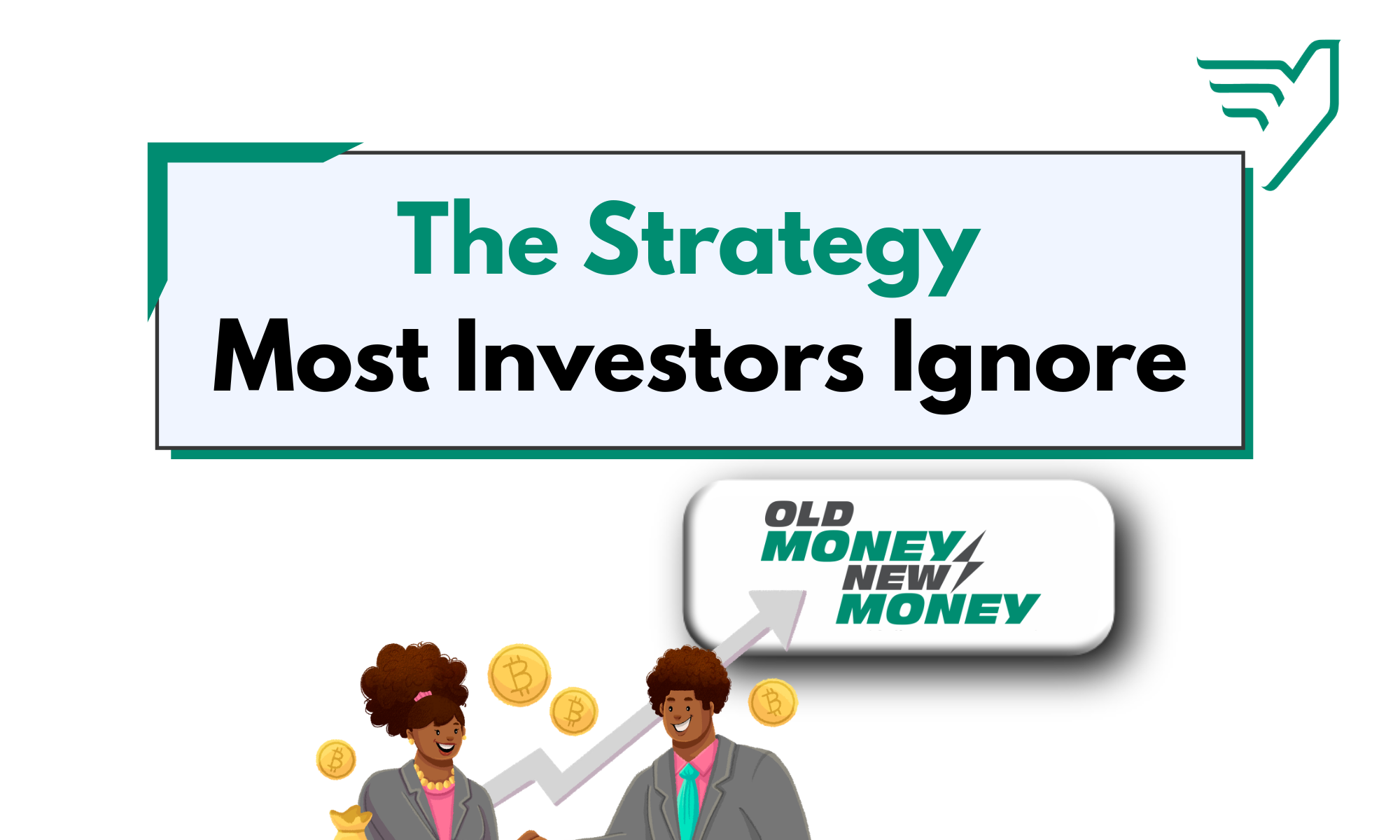
The Strategy Most Investors Ignore: Old Money New Money

Old Money vs New Money investment strategy concept showing wealth protection and growth

Market volatility doesn’t just test your portfolio, it tests your decision-making. When markets fall, losses are often less about the market itself and more about emotional reactions, poor timing, and lack of strategy.

One of the most overlooked yet powerful approaches to solving this problem is the Old Money vs New Money framework by Enrichwise.

This simple shift in thinking can transform how you invest, especially during uncertain times.

Why Treating All Money the Same Is a Costly Mistake

Most investors make one fundamental error:
They apply the same strategy to all their money.

This leads to:

  • Over-investing during market highs
  • Panic selling during downturns
  • Losing previously built wealth
  • Missing opportunities when markets correct

The solution? Segmentation with purpose.

What Is the Old Money vs New Money Strategy?

The Enrichwise framework divides your portfolio into two clear categories:

1. Old Money

Wealth you’ve already accumulated over time

2. New Money

Fresh capital you’re investing today

Each category has a different role, mindset, and strategy.

Old Money: Protect, Preserve, and Stabilize

Old money is your financial foundation. It has already contributed to your wealth creation and survived market cycles.

The Objective:

Capital preservation + disciplined growth

Key Strategies:

  • Rebalance portfolio to maintain asset allocation (equity vs debt)
  • Book profits when equity exposure exceeds targets
  • Reduce high-risk or unnecessary positions
  • Focus on consistency over aggressive returns

Mindset:

Think of old money like a well-set batsman, the goal is not to take unnecessary risks, but to protect the innings and stay steady.

Common Mistake:

Treating old money like fresh capital and increasing risk during market highs, often leading to erosion of gains.

New Money: Capture Growth Opportunities

New money is your growth engine. It thrives on volatility, the very thing that scares most investors.

The Objective:

Long-term wealth creation through smart deployment

Key Strategies:

  • Continue SIPs (Systematic Investment Plans) without interruption
  • Increase investments during market dips (if financially feasible)
  • Focus on long-term accumulation
  • Ignore short-term market noise

Mindset:

Think of a new batsman at the crease, there’s room to take calculated risks and build momentum.

Common Mistake:

Stopping investments during downturns, exactly when valuations are attractive.

Old Money vs New Money: Key Differences

Aspect Old Money New Money
Purpose Protection & stability Growth & opportunity
Risk Level Lower, controlled Higher, calculated
Strategy Focus Rebalancing & profit booking SIPs & dip investing
Behavior in Crash Defensive Aggressive (strategically)

Why This Investment Framework Works

Market volatility isn’t the real problem, mismanagement is.

By separating old and new money, you create:

  • Clear decision-making boundaries
  • Reduced emotional investing
  • Protection of accumulated wealth
  • Better use of market corrections

Most importantly, it helps eliminate the classic mistake:
Buying high and selling low

The Enrichwise Edge: Balance Creates Wealth

At its core, the framework is about clarity and balance:

  • Old Money = Stability + Discipline
  • New Money = Growth + Opportunity

This structure ensures you:

  • Stay calm during market downturns
  • Act with purpose instead of panic
  • Build wealth consistently over time

Final Thoughts

In volatile markets, strategy beats emotion.

The Old Money vs New Money approach helps you:

  • Protect what you’ve built
  • Manage risk better
  • Stay confident during uncertainty

Ask yourself:
“Am I treating all my money the same?”

Because that answer can define your financial future.

Ready to Invest Smarter?

Bring clarity and structure to your investments with Enrichwise.

Your money deserves more than guesswork.

Connect today and start investing with discipline, strategy, and confidence.

Follow our Enrichwise Channels for more information, updates, and practical Investments Guidance.
Website: https://enrichwise.com/
Youtube: https://www.youtube.com/@enrichwise_financial_services
Instagram: https://www.instagram.com/enrichwise/

5 Stages of Wealth: Path to Financial Freedom & Abundance

Illustration of the 5 stages of wealth: Survival, Security, Stability, Freedom, and Abundance

Achieving financial freedom and abundance is a journey that takes time, discipline, and strategy. To help you navigate this journey, it’s essential to understand the 5 types of wealth that people experience throughout their lives. By identifying where you stand today, you can make informed decisions that will guide you towards the next stage of financial security.

Let’s break down these 5 stages of wealth:

1. Survival: The Early Struggles (Ages 25-30)

Who’s in this stage?
The Survival stage typically applies to individuals in the 25 to 30 age group. At this stage, you’re just beginning your career, and your income is usually spent as quickly as you earn it. You may have little to no savings and are focused on managing day-to-day expenses.

Challenges faced during this phase:

  • Living paycheck to paycheck
  • Lack of savings or investments
  • High living expenses (student loans, rent, etc.)
  • Limited financial knowledge

While it can be tough, understanding that this stage is temporary can help you plan your way to the next level. Start focusing on building a budget and saving a portion of your income.

2. Security: Building a Safety Net (Ages 30-35)

Who’s in this stage?
By the time you reach 30 to 35, your financial situation has improved. You might have taken out loans (like a home loan) and started saving. However, you still don’t have enough financial security to live without a stable income.

Key characteristics of this stage:

  • Increased income with rising expenses (e.g., marriage, children)
  • A steady but limited savings plan
  • High debt due to loans and mortgages
  • Ability to save, but financial stability is still uncertain

You’ve moved past survival mode, but you’re not yet financially independent. Focusing on debt management, emergency funds, and consistent savings will set the stage for the next phase: Stability.

3. Stability: Laying the Groundwork for the Future (Ages 35-45)

Who’s in this stage?
During the Stability phase (typically ages 35-45), you’ve likely seen a significant increase in income. You might own property, have paid down some of your debts, and started investing.

Defining features of this phase:

  • Higher income, better job stability
  • Liquid corpus of 1-2 times your CTC (Cost to Company)
  • Investments in mutual funds or other assets
  • Ability to afford vacations, better education for children, etc.
  • Loans are mostly managed, but early retirement is still far off

While you’re relatively stable, your corpus is not yet enough to leave work early or be financially independent for the long term. Stay focused on building wealth through long-term investments like SIPs (Systematic Investment Plans) and retirement planning.

4. Freedom: Enjoying Passive Income (Ages 45-55 or 60)

Who’s in this stage?
In the Freedom phase, typically between ages 45-55 (or even 60), you have built enough wealth to stop depending on a paycheck. Your passive income from investments or business ventures allows you to maintain your lifestyle without working actively.

What defines financial freedom?

  • Income 5-8 times your CTC
  • Passive income sources (e.g., investments, businesses)
  • Ability to afford a comfortable lifestyle, travel, and pursue personal interests
  • No longer reliant on an active income

At this point, you can confidently step back from work, knowing that your finances are secure enough to support your lifestyle. However, it’s crucial to continue reinvesting and managing your finances to ensure the sustainability of your wealth.

5. Abundance: Achieving Wealth Beyond Limits (10-20+ times CTC)

Who’s in this stage?
The Abundance stage is the pinnacle of wealth, where very few people reach. In this phase, your corpus is 10-20 times your annual CTC or more. You have multiple sources of income and wealth-generating assets, such as businesses, investments, and philanthropic efforts.

Key characteristics of abundance:

  • Wealth 10-20 times your CTC or higher
  • Multiple income sources (businesses, investments, real estate)
  • Active involvement in charitable causes, social initiatives, or setting up foundations
  • Financial independence with a massive financial buffer

Achieving abundance means you not only enjoy financial freedom but also have the means to impact society, create generational wealth, and give back to your community. It’s a rare but achievable goal for those who remain disciplined in managing their finances.

How to Achieve Financial Freedom and Abundance

While each stage requires different strategies, achieving financial freedom and abundance boils down to consistent actions over time. Here’s what you need to do:

  1. Harness the Power of Compounding
    Start investing early and let the power of compounding work for you. Small, consistent contributions to mutual funds, SIPs, and other investment vehicles can lead to massive wealth over time.
  2. Minimize Mistakes
    While mistakes are inevitable, avoid making costly errors such as failing to diversify your investments or neglecting insurance. Educate yourself and consult financial advisors when necessary.
  3. Stick to a Financial Process
    Follow a structured financial plan and stay disciplined. Regularly review your financial goals, rebalance your portfolio, and step up your SIP investments to increase your corpus over time.
  4. Long-Term Consistency
    Achieving freedom and abundance requires patience. Focus on long-term goals rather than short-term gains, and avoid chasing trends. Stay committed to your plan, and you’ll move closer to your financial goals.

Where Are You Now?

The journey to financial freedom and abundance is different for everyone. Start by assessing where you currently stand. Are you in the Survival stage, struggling to save? Or are you on your way to Stability and Security? Regardless of where you are, remember that with consistency, the right strategies, and disciplined financial planning, you can achieve financial freedom and abundance.

Whether you’re starting with small savings or already on the path to Stability, it’s never too late to build wealth. So, start planning today, stay focused on your financial goals, and move steadily toward the financial freedom you deserve!

For a video explanation, click here: https://youtube.com/shorts/7W4UZOM_VpU?si=GwiJc3H4nNld3Aoj

Ready to Take the Next Step Towards Financial Freedom?
If you’re looking to navigate your financial journey and reach your goals of financial security, stability, and abundance, Enrichwise is here to help! Our team of experts can guide you through smart investment strategies, solutions, and more to secure your financial future.

Connect with Enrichwise today to start planning for a prosperous tomorrow. We’ll help you take control of your finances and build a roadmap to financial independence.

Scan here Now and start your journey with Enrichwise!

Follow Our Enrichwise Channels for more information, updates, and practical Investments Guidance.
Website: https://enrichwise.com/
Youtube: https://www.youtube.com/@enrichwise_financial_services
Instagram: https://www.instagram.com/enrichwise/

HDFC Bank Issue: Should Investors Panic Now? Explained

HDFC Bank governance issue explained with investor perspective and market reaction

Panic or Perspective?

In recent days, HDFC Bank has been at the center of market attention and the reaction has been sharp.

A sudden leadership exit, internal action against senior executives, and reported links to the Credit Suisse bond episode have triggered concern among investors.

But the real question is:

Is this a financial crisis or a governance issue amplified by market sentiment?

Let’s break it down with clarity, data, and investor perspective.

What Exactly Happened? (Simple Breakdown)

1. Sudden Leadership Exit

The bank witnessed an abrupt resignation at the Chairman level, reportedly due to differences over governance and ethical standards.

Markets dislike uncertainty
Leadership exits often trigger immediate negative sentiment

2. Internal Action Over Mis-Selling

Three senior executives were reportedly asked to leave over allegations of mis-selling high-risk AT1 bonds linked to Credit Suisse.

What are AT1 Bonds?

  • High-risk, perpetual debt instruments
  • Designed to absorb losses during financial stress
  • Can be written down to zero under extreme conditions

In the Credit Suisse crisis, these bonds were wiped out completely.

3. Why This Became Serious

This issue is not about direct financial losses for the bank.

It is about:

  • Customer trust
  • Governance standards
  • Internal compliance systems

And historically, markets react strongly to governance concerns, even more than financial metrics in the short term.

Scale of the Issue: Putting Numbers in Perspective

Understanding scale is critical to avoid emotional reactions.

HDFC Bank’s Size

  • Total Assets: ~₹40 lakh crore
  • Market Cap: ~₹12 lakh crore
  • Customer Base: 12+ crore

Size of the Issue

  • Estimated exposure: ~₹1,000 crore

Reality Check

Metric Value
Total Assets ₹40,00,000+ crore
Issue Size ~₹1,000 crore
Impact ~0.0025%

Financial impact is negligible
The issue is about reputation not solvency

HDFC Bank vs Credit Suisse: Clearing the Confusion

A major driver of panic is the comparison with the Credit Suisse collapse but this comparison is misleading.

What Happened at Credit Suisse?

  • Large-scale financial losses
  • Massive deposit outflows
  • Collapse of market confidence
  • Emergency bailout and forced merger

What’s Happening at HDFC Bank?

Factor Credit Suisse HDFC Bank
Nature of Issue Financial Crisis Governance Concern
Deposits Outflow Stable
Capital Strength Weak Strong
Regulatory Position Crisis Stable

Key Insight:
Credit Suisse collapsed due to financial weakness.
HDFC Bank is dealing with a contained governance issue.

The Pedigree of HDFC Bank

Before making any investment decision, it’s important to step back and look at the institution:

  • India’s largest private sector bank
  • Classified as systemically important (Too Big To Fail)
  • 25+ years of consistent performance
  • Strong profitability and asset quality
  • High regulatory trust

These are not characteristics of a fragile institution

Why Did Markets React So Sharply?

Markets are forward-looking but also emotional in the short term.

Key Triggers:

  • Leadership uncertainty
  • Governance-related headlines
  • Fear-driven comparisons with global events

Markets often price in worst-case scenarios immediately

Should Investors Worry?

Let’s simplify this with 3 critical questions:

1. Are deposits safe? Yes

2. Is the bank financially strong and profitable? Yes

3. Is there any regulatory red flag? No major concern reported

Conclusion:
There is no evidence of a financial crisis, only a governance concern under scrutiny.

What Should Investors Do Now?

1. Separate Noise from Reality

  • Stock price fall ≠ business deterioration
  • Headlines ≠ fundamentals

Most short-term reactions are sentiment-driven

2. Strategy for Existing Investors (Old Money)

  • Stay invested
  • Rebalance if overweight
  • Avoid panic selling

Long-term wealth is built by staying disciplined during volatility

3. Strategy for New Investors (New Money)

  • Use corrections to accumulate gradually
  • Avoid lump-sum emotional entry
  • Focus on long-term allocation

Volatility creates opportunity not just risk

Key Lessons for Investors

1. Governance Matters

Even the strongest institutions can face governance issues but not all issues threaten survival.

2. Markets Often Overreact

Short-term price movements frequently overprice fear and uncertainty

3. Discipline Beats Emotion

Successful investing is not about avoiding volatility 

It is about managing behavior during volatility

Crisis or Correction?

  • Not a financial crisis
  • A governance concern with limited financial impact
  • Market reaction largely sentiment-driven

Conclusion: Calm Minds Create Wealth

The situation at HDFC Bank is serious but contained.

  • The institution remains fundamentally strong
  • The issue is reputational, not structural
  • Long-term investors should focus on data, not noise

Smart investors respond to facts not headlines

If you’re looking to navigate such market events with clarity and structure,

Scan here or click on the link to Connect with Enrichwise to understand a disciplined approach to investing.


http://bit.ly/4c1956M

Frequently Asked Questions (FAQ)

Is HDFC Bank in trouble?

No. The bank is financially stable. The issue is governance-related, not solvency-related.

Can HDFC Bank collapse like Credit Suisse?

Highly unlikely. The situations are fundamentally different in scale and nature.

Is this a good time to invest in HDFC Bank?

For long-term investors, gradual accumulation during volatility may be a reasonable approach.

This is for informational purposes only and should not be construed as investment advice. Please consult your financial advisor before making any investment decisions.


Follow our Enrichwise Channels for more information, updates, and practical Investments Guidance.

Website: https://enrichwise.com/
Youtube: https://www.youtube.com/@enrichwise_financial_services
Instagram: https://www.instagram.com/enrichwise/

Why Stock Markets Are Falling Right Now (Explained)

Oil prices rising, rupee weakening and stock market volatility explained for investors

Global markets have recently witnessed heightened volatility. Oil prices are rising sharply, the rupee has weakened, and equity markets are under pressure.

While these movements can feel alarming for investors, understanding the economic chain reaction behind them helps put things into perspective.

In this article, we break down why markets are falling right now, how oil prices impact inflation and stocks, and how investors can approach such periods calmly.

Oil Prices Are Driving the Current Market Volatility

A significant trigger behind the current market movement is the sharp rise in crude oil prices.

When oil prices surge, the impact spreads across the entire economy because oil is a key input for multiple industries. Higher crude prices increase costs in areas such as:

  • Transportation and logistics
  • Manufacturing and production
  • Energy and electricity generation
  • Food supply chains

As these costs rise, businesses and consumers both feel the pressure.

Higher Oil Prices Can Lead to Rising Inflation

When production and transportation costs increase, companies often pass on these costs to consumers.

This leads to inflation, which means the overall price of goods and services increases across the economy.

Higher inflation can influence economic growth and corporate profitability. Businesses may face higher operating expenses, which can affect profit margins.

For investors, this creates uncertainty about future earnings growth.

How Inflation Affects Corporate Profits and Stock Prices

When companies experience rising costs due to inflation:

  • Profit margins may shrink
  • Investor sentiment can become cautious
  • Equity markets may see short-term corrections

This is why periods of rising inflation are sometimes accompanied by stock market volatility or declines.

However, it is important to remember that market corrections are a normal part of investing cycles.

The Global Nature of Market Selloffs

Recent market movements are not limited to India.

Many global equity markets, including major developed and emerging economies, have also experienced volatility. Global markets are interconnected through trade, capital flows, and economic policies.

When uncertainty rises globally, investors may temporarily reduce risk exposure, which can lead to broad-based market corrections.

Why the Rupee Weakens When Oil Prices Rise

India imports a large portion of its crude oil requirements.

When oil prices rise globally:

  • India needs more US dollars to import oil
  • Demand for dollars increases
  • The Indian rupee may weaken against the dollar

A weaker rupee can make imports more expensive and may add to inflationary pressures.

Geopolitical Events Can Move Commodity Markets Quickly

Oil markets are highly sensitive to geopolitical developments and supply disruptions.

Events such as:

  • Conflicts in key oil-producing regions
  • Production cuts by major oil exporters
  • Supply chain disruptions can cause rapid changes in oil prices.

Because oil is a global commodity, price changes can quickly ripple across economies and financial markets.

What Should Investors Do During Market Volatility?

Periods of volatility can feel uncomfortable, but they are not unusual in long-term investing.

Historically, markets have experienced multiple cycles of uncertainty, corrections, and recoveries. Long-term investors often benefit from staying focused on disciplined investment processes rather than reacting to short-term market movements.

Key principles investors may consider include:

  • Maintaining a long-term perspective
  • Reviewing portfolio allocation periodically
  • Avoiding emotional investment decisions during market fluctuations

A structured investment approach can help investors navigate uncertain periods more effectively.

Following a Disciplined Investment Process

Market movements are influenced by multiple factors including global events, economic policies, and investor sentiment.

What often helps investors navigate such periods is a disciplined and research-driven approach to portfolio management.

At Enrichwise, we focus on structured investment thinking through frameworks such as PRAG and the Old Money – New Money approach, which emphasize long-term wealth creation and prudent portfolio strategies.

Seeking Professional Guidance

If you are unsure how market movements may impact your portfolio, it may help to review your investments with a qualified financial professional.

At Enrichwise, we help investors evaluate their portfolios, understand market developments, and build long-term investment strategies aligned with their financial goals.

You can connect with our team for portfolio insights, structured investment guidance, and long-term wealth planning support.

Mutual Fund investments are subject to market risks. Please read all scheme related documents carefully before investing.

Follow our Enrichwise Channels for more information, updates, and practical Investments Guidance.
Website: https://enrichwise.com/
Youtube: https://www.youtube.com/@enrichwise_financial_services
Instagram: https://www.instagram.com/enrichwise/
5 Signs You Are Overcomplicating Your Investment Journey

Simple investing concept showing a person confused with financial charts, symbolizing overcomplicating investments and the need for a simple strategy.

For many people, starting their investment journey feels overwhelming.

There is constant information about markets, stocks, mutual funds, economic trends, and financial strategies. While learning is valuable, too much information can make investing seem more complicated than it needs to be.

In reality, successful investing often comes down to simple habits, consistency, and patience.

If you feel stuck or unsure about where to begin, you may simply be overcomplicating the process. Here are five common signs that this might be happening.

1. You Compare Your Beginning to Someone Else’s Middle

One of the biggest reasons people hesitate to start investing is comparison.

On social media or online forums, you may see investors sharing large portfolios or impressive returns. This can make it seem like your first investment needs to be equally significant.

But every investor begins somewhere.

Starting small is completely normal. Even a modest monthly investment can help you build the habit of investing and gradually grow your portfolio over time.

The key is not the size of your first investment, but starting your journey and staying consistent.

2. You Think You Need to Understand Everything Before Starting

Many new investors feel they must understand every financial concept before investing.

They try to learn about:

  • Tax rules
  • Market cycles
  • Inflation
  • Global economic trends
  • Portfolio strategies

While knowledge is helpful, waiting until you know everything can delay your start indefinitely.

Investing is often a learning journey, and understanding tends to improve as you gain experience. Instead of waiting for perfect knowledge, focus on taking the first step responsibly and gradually building awareness over time.

3. You’re Waiting for the “Perfect Time” to Invest

Another common challenge is trying to find the perfect moment to begin investing.

People often say they will start:

  • After the next market correction
  • After their next salary increase
  • When they feel more confident about markets

However, markets are unpredictable, and the perfect time is rarely obvious in advance.

Historically, consistency and long-term participation have played a larger role in investment outcomes than trying to time short-term market movements.

4. You’re Waiting for a Completely Risk-Free Investment

Every investment carries some level of risk.

Waiting for an option that has no risk at all can prevent you from taking any step toward long-term financial growth.

Instead of trying to eliminate risk entirely, the focus should be on understanding and managing risk appropriately based on your financial goals, time horizon, and comfort level.

A thoughtful investment approach generally includes diversification, discipline, and periodic review.

5. You Keep Changing Your Investment Strategy

With so much financial content available today, it is easy to jump from one strategy to another.

One week it might be stock picking.
Next week it might be a trending portfolio strategy.
Then a new “best investment approach” appears online.

Frequent strategy changes can lead to confusion and inconsistency.

Many experienced investors emphasize the importance of staying disciplined with a well-considered strategy instead of constantly switching approaches.

Consistency often plays a critical role in long-term investing.

A Simple System Often Works Better Than a Perfect Strategy

Investing does not always require a complicated plan.

In many cases, what matters most is building a simple and sustainable system, such as:

  • Starting with manageable investment amounts
  • Staying consistent with contributions
  • Reviewing investments periodically
  • Keeping a long-term perspective

Over time, discipline and patience can become powerful contributors to financial growth.

Final Thoughts

If investing feels confusing, it may not be because the process is too complex. Sometimes it is simply because we are trying to make it perfect before starting.

A simpler approach focused on clarity, consistency, and long-term thinking can often make the journey easier to sustain.

Start Your Investment Journey with Clarity

If you would like guidance on understanding investment options and building a structured approach aligned with your financial goals, the team at Enrichwise can help you take informed steps toward your investment journey.

Mutual fund investments are subject to market risks. Read all scheme related documents carefully before investing.

Follow our Enrichwise Channels for more information, updates, and practical Investments Guidance.
Website: https://enrichwise.com/
Youtube: https://www.youtube.com/@enrichwise_financial_services
Instagram: https://www.instagram.com/enrichwise/


Middle East War 2026: Market Impact & Investment Strategy

Global stock market reacting to Middle East war and oil price spike

The past few days have shaken global headlines.

Reports of airstrikes. Missile retaliation. Senior leaders killed. Oil prices are surging. Markets reacting.

If you’re an investor wondering “How will this war affect my money?” — this breakdown explains what’s happening and what history tells us about markets during geopolitical crises.

What Is Operation Epic Fury?

On February 28, 2026, the United States and Israel reportedly launched a large-scale military operation against Iran, referred to as Operation Epic Fury.

According to initial reports:

  • The objective was to dismantle Iran’s nuclear program
  • Destroy missile capabilities
  • Target senior leadership
  • Cripple strategic military infrastructure

Strikes were reported in major Iranian cities including:

  • Tehran
  • Isfahan
  • Qom
  • Karaj
  • Kermanshah

Iran responded with ballistic missiles and drone attacks, targeting Israel and U.S. military bases in the Gulf region.

The situation has escalated tensions across the Middle East, with neighboring countries on high alert.

Why This War Matters for Global Markets

Geopolitical conflicts in the Middle East impact financial markets for one primary reason:

Oil.

Iran controls access to the Strait of Hormuz, one of the world’s most critical oil chokepoints.

  • Nearly 20% of global oil supply passes through this route
  • Any disruption can spike crude oil prices
  • Higher oil leads to higher transportation and production costs
  • That feeds into inflation globally

When oil spikes:

  • Inflation fears rise
  • Central banks may delay rate cuts
  • Stock markets react negatively

What Happens to Markets During War?

Historically, markets react in three phases:

1 Immediate Shock

  • Stocks fall
  • Oil surges
  • Gold rises
  • Investors move into the U.S. dollar

This is called a “flight to safety.”

2. Stabilization

  • Volatility remains high
  • News headlines drive short-term moves
  • Long-term investors begin accumulating

3. Recovery

  • Markets rebound
  • Economic activity continues
  • Long-term trend resumes upward

What History Tells Us

Let’s look at how major conflicts impacted markets:

1. September 11 attacks (2001)

  • U.S. markets shut down for a week
  • S&P 500 fell ~11.6% in days
  • Within 12 months: fully recovered

2. Gulf War (1990)

  • Markets fell ~15%
  • Oil prices surged sharply
  • One year later: markets were up ~29%

3. Russian invasion of Ukraine (2022)

  • Sharp global selloff
  • Indian Sensex dropped over 4,000 points in days
  • Within 12–18 months: new highs

The Pattern Is Clear

Every major geopolitical shock follows a similar cycle:

Short term: Panic. Volatility. Red portfolios.
Long term: Recovery. Growth. New highs.

Why?

Because:

  • Businesses continue operating
  • People continue consuming
  • Governments stimulate economies
  • Innovation doesn’t stop

Wars create headlines.
Economies create wealth.

How This Impacts Your SIP & Long-Term Investments

If you invest via SIP (Systematic Investment Plan), this is what you need to remember:

❌ Don’t :

  • Stop your SIP
  • Withdraw investments out of fear
  • Panic sell

✅ Do’s :

  • Stay invested
  • Continue monthly investments
  • Use market dips to accumulate more units

When markets fall, your SIP buys more units at lower prices.
When markets recover, those extra units compound your returns.

Historically, the biggest mistake investors make is selling during fear and re-entering after recovery.

Will Markets Be Volatile?

Yes.

Expect:

  • Oil price fluctuations
  • Short-term equity corrections
  • Defensive sectors outperforming
  • Gold and USD strength

But volatility is temporary. Long-term growth is structural.

Final Thoughts: This Too Shall Pass

Wars are frightening.
Markets falling feels uncomfortable.

But history shows:

  • Every crisis eventually stabilizes
  • Markets recover
  • Long-term investors are rewarded

The investors who build wealth are not the ones who predict wars —
They are the ones who stay invested despite them.

If you are feeling nervous about your portfolio right now, that’s normal.

Just remember:

Fear is temporary. Discipline is permanent.

Keep your SIP running.
Think long term.
Let compounding do the heavy lifting.

Worried about your investments during market volatility?
At Enrichwise, we help investors stay calm, stay invested, and build long-term wealth, even during global uncertainty.

Connect with Enrichwise and start investing with confidence.

The information provided in this article is for educational and informational purposes only and should not be considered financial, investment, legal, or tax advice. Mutual Fund investments are subject to market risks. Please read all scheme-related documents carefully before investing.

Follow our Enrichwise Channels for more information, updates, and practical Investments Guidance.
Website: https://enrichwise.com/
Youtube: https://www.youtube.com/@enrichwise_financial_services
Instagram: https://www.instagram.com/enrichwise/

5 Retirement Mistakes People Realize Only When It’s Too Late

Retirement planning often gets pushed aside, especially when life is busy. The truth is, many people face regrets later, not from one huge mistake, but from missed opportunities and wrong assumptions that slowly chip away at their financial security. If you’re looking ahead to retirement, avoid these common errors:

1. Putting Retirement Planning on Hold

It’s tempting to delay retirement planning when you’re younger. Life moves quickly – buying a home, raising children, advancing in your career, and more. But the reality is, the earlier you start, the better your chances.
Key point: Time is critical. The sooner you start saving, the more your money will grow through compounding. By waiting until your 40s or 50s, it may be too late to make up for lost time.

Pro Tip: Begin planning for retirement as soon as you can to set yourself up for long-term success.

2. Assuming Expenses Will Drop After Retirement

Many people think their expenses will shrink when they stop working. While some costs will go down (like commuting), others may rise.
Here are some things to consider:

  • Healthcare: As you age, medical costs often increase.

  • Insurance premiums: These may go up over time.

  • Travel and hobbies: With more free time, you might want to explore new activities, which could add to your expenses.

  • Inflation: Prices rise regardless of whether you’re working.
    The result? Many retirees face growing expenses, leaving them worried about running out of money.

3. Relying on One Income Source

Many people depend on a single income stream in retirement, like a pension or rental income. But what if that source fails?

  • A rental property may remain vacant.

  • Health problems could limit your ability to work.

  • Business slowdowns can affect cash flow.
    Solution: Diversify your income. Having multiple sources can give you a more secure financial future.

4. Playing It Too Safe

As retirement nears, it’s natural to become more conservative with your investments. But don’t be too cautious!
Why? Investments that are too safe often provide low returns, and in the long run, you may struggle to outpace inflation. You still need growth in your portfolio, especially since retirement could last 30+ years.

Solution: Find the right balance. While reducing risk is important, you also need investments that continue to grow.

5. Underestimating Life Expectancy

People often base their retirement plans on how long their parents or grandparents lived. But life expectancy is much higher today. Advances in healthcare mean many people live longer, often with moderate health.
The reality? Running out of money at 85 is far worse than running out at 65.
Key takeaway: Plan for longevity. Don’t just prepare for the first 10-15 years of retirement—prepare for decades.

The Biggest Regret: “We Thought We’d Adjust”

The most common regret retirees have is thinking they could adjust later. The truth is, making changes is easier when done gradually. Early course corrections are less painful than waiting until it’s too late.

Bottom Line: Retirement planning is about making informed decisions early. The small steps you take now can lead to a secure, worry-free future.

Takeaway: Start planning for retirement today. Avoid these mistakes to ensure a stable and fulfilling retirement.

At Enrichwise, we specialize in creating personalized, sustainable retirement plans. Reach out to us today and take the first step toward a secure retirement.

Mutual Fund investments are subject to market risks. Please read all scheme-related documents carefully before investing.

Follow our Enrichwise Channels for more information, updates, and practical Investments Guidance.
Website: https://enrichwise.com/
Youtube: https://www.youtube.com/@enrichwise_financial_services
Instagram: https://www.instagram.com/enrichwise/

Main Categories of SIF in India Explained

Main categories of Specialised Investment Funds in India showing equity, debt and hybrid SIF types

India’s investment landscape is evolving rapidly, and Specialised Investment Funds (SIFs) are emerging as a powerful new category designed for sophisticated investors seeking flexible, strategy-driven portfolios.

SIFs combine the discipline of mutual funds with the flexibility of hedge-fund-like strategies, allowing fund managers to use long-short strategies, derivatives, sector rotation, and multi-asset allocation.

In this guide, we will break down the main categories of SIF in India in a simple, structured way.

What are Specialised Investment Funds (SIF)?

Specialised Investment Funds are advanced mutual fund–like structures that allow fund managers to:

  • Take long and short positions
  • Use derivatives strategically
  • Invest across equity, debt, commodities and REITs
  • Use dynamic asset allocation
  • Offer interval or open-ended liquidity

They are designed for investors looking for risk-managed growth, downside protection, and diversified strategies.

Main Categories of SIF in India

SIFs are divided into three major categories:

  1. Equity-Oriented SIFs
  2. Debt-Oriented SIFs
  3. Hybrid SIFs

Let’s understand each in detail.

1. Equity-Oriented SIFs

Equity SIFs primarily invest in listed stocks and equity derivatives, while also allowing limited short selling to manage risk and volatility.

These funds typically require at least 80% equity exposure.

Types of Equity SIFs

1. Equity Long-Short Fund

This is the core SIF equity strategy.

Key Features

  • Minimum 80% exposure to equities
  • Up to 25% short exposure via derivatives
  • Invests in listed stocks and equity instruments
  • Available as open-ended or interval funds
  • Redemption frequency: Daily

Who is it for?

Investors seeking equity growth with downside protection.

2. Equity Ex-Top 100 Long-Short Fund

This strategy focuses on mid-cap and small-cap opportunities.

Key Features

  • At least 65% investment in stocks outside top 100 companies
  • Up to 25% short exposure in non-large caps
  • Targets high-growth emerging companies
  • Redemption frequency: Daily

Who is it for?

Investors seeking higher growth potential beyond large caps.

3. Sector Rotation Long-Short Fund

This is a tactical sector-focused strategy.

Key Features

  • Invests in maximum 4 sectors
  • Minimum 80% equity exposure
  • Can short stocks at sector level
  • Designed to capture sector cycles
  • Redemption frequency: Daily

Who is it for?

Investors who want exposure to economic and sector trends.

2. Debt-Oriented SIFs

Debt SIFs focus on interest rates, credit opportunities, and duration strategies, while using derivatives to manage risk.

These funds offer lower volatility compared to equity SIFs.

Types of Debt SIFs

1. Debt Long-Short Fund

This strategy actively manages interest rate cycles and credit spreads.

Key Features

  • Invests across duration and credit strategies
  • Uses exchange-traded debt derivatives
  • Limited short exposure allowed
  • Redemption frequency: Weekly

Who is it for?

Investors seeking stable, risk-managed income strategies.

2. Sectoral Debt Long-Short Fund

This strategy invests in specific debt sectors such as banking, NBFCs, or infrastructure.

Key Features

  • At least 50% exposure to 2+ debt sectors
  • Up to 25% short exposure
  • Sector-focused debt strategy
  • Redemption frequency: Weekly

Who is it for?

Investors looking for targeted fixed-income opportunities.

3. Hybrid SIFs

Hybrid SIFs combine equity, debt, REITs, InvITs, and commodities to build diversified portfolios.

These are among the most flexible SIF strategies.

Types of Hybrid SIFs

1. Active Asset Allocation Long-Short Fund

A dynamic multi-asset strategy.

Key Features

Invests across:

  • Equity
  • Debt
  • REITs / InvITs
  • Commodity derivatives
  • Up to 25% short exposure
  • Actively shifts allocation based on market conditions
  • Redemption frequency: Twice a week

Who is it for?

Investors seeking all-weather portfolio management.

2. Hybrid Long-Short Fund

A balanced approach between equity and debt.

Key Features

  • Minimum 25% equity exposure
  • Minimum 25% debt exposure
  • Up to 25% short exposure
  • Balanced long-short strategy
  • Redemption frequency: Twice a week

Who is it for?

Investors looking for balanced growth with risk control.

Why SIFs Are Gaining Popularity in India

SIFs are becoming popular because they offer:

  • Downside risk management through shorting
  • Tactical allocation across asset classes
  • Better volatility control
  • Institutional-style strategies for investors
  • Flexibility beyond traditional mutual funds

They aim to generate returns across market cycles, not just bull markets.

Final Thoughts

Specialised Investment Funds represent the next evolution of mutual fund investing in India.

They provide investors with:

  • Advanced strategies
  • Better risk management
  • Diversification across asset classes
  • Potential for consistent long-term performance

As markets become more volatile and complex, SIFs are likely to play a major role in modern portfolios.

Want to Explore Whether SIFs Suit Your Portfolio?

Every investor’s risk profile and goals are different.
If you would like to understand how SIF strategies can fit into your investment plan, connect with Enrichwise for personalized guidance.

Flexi-Cap vs Multi-Cap Funds: Differences & Which Suits You?

Comparison of Flexi-Cap vs Multi-Cap Mutual Funds

Investing in equities can be a lucrative way to grow wealth, but understanding the nuances of different investment vehicles is key. Two popular types of equity mutual funds are Flexi-Cap and Multi-Cap funds. While both invest across large-, mid-, and small-cap stocks, they do so with distinct strategies and rules. This blog will break down the differences between them, helping you choose the right one for your investment goals.

What is a Flexi-Cap Fund?

A Flexi-Cap Fund invests in large-, mid-, and small-cap stocks but with flexibility in how the capital is allocated. The fund manager can adjust the allocation to each category based on market conditions and opportunities. As long as 65% of the portfolio is invested in equities, the manager has the freedom to move money across different market-cap segments, ensuring the portfolio remains aligned with the prevailing market outlook.

Key Features of Flexi-Cap Funds:

  • No mandatory allocation to each segment; managers have the flexibility to adjust as per market conditions. 
  • Dynamic management: The fund can tilt toward large caps during stable times and mid or small caps when they are undervalued. 
  • Risk Management: The manager can reduce exposure to high-risk segments, such as small caps, during volatile phases.

What is a Multi-Cap Fund?

A Multi-Cap Fund, on the other hand, follows stricter guidelines. It invests at least 75% of its assets in equities, with a minimum of 25% each in large-cap, mid-cap, and small-cap stocks. This ensures the portfolio is always diversified across all three market-cap categories, regardless of market conditions. Even if a particular segment, like small caps, is underperforming or expensive, the fund will maintain its allocation.

Key Features of Multi-Cap Funds:

  • Mandatory Allocation: The fund must invest at least 25% in each of the three segments. 
  • Built-in Diversification: No matter how the market performs, the fund maintains exposure to all three segments. 
  • Limited Flexibility: While diversification is a strength, it can result in the fund staying invested in underperforming segments.

Why Diversification Across Market Caps Matters

The performance of large-, mid-, and small-cap stocks can vary significantly across market cycles. In some years, large-cap stocks may outperform, while in others, mid- or small-caps may lead. Diversification ensures that investors are not overly dependent on any one segment, reducing the risk of volatility.

Historical Performance:

  • In 2025, large-cap stocks showed steady returns, mid-caps were more subdued, and small caps struggled. 
  • In other years, small caps led the way, while large-caps faced challenges.
    By diversifying across market caps, investors can potentially smooth out returns and avoid being overly impacted by short-term fluctuations in any one segment.

Flexi-Cap vs Multi-Cap: The Key Differences

Feature Flexi-Cap Fund Multi-Cap Fund
Flexibility Fund managers has the flexibility to allocate between large, mid, and small caps based on market outlook. The fund must maintain a strict allocation of 25% in each category, regardless of market conditions.
Exposure to Segments No mandatory exposure to each segment; allocation can change over time. Constant exposure to large, mid, and small caps.
Risk Management Fund managers can reduce exposure to volatile segments (e.g., small caps). Always maintains exposure to small caps, even during downturns.
Fund Strategy Active management with periodic shifts in allocations. Balanced, rule-based structure with set allocations.
Suitability Suitable for investors comfortable with active management and changes in the portfolio. Best for investors seeking steady diversification and discipline.

How They Work in Real Life:

  1. Flexi-Cap Funds: 
    • The flexibility in allocation allows the fund manager to navigate volatile markets, moving away from sectors that are overvalued and shifting focus to those that offer better potential. 
    • For example, if mid-cap stocks are expensive, the fund manager might choose to allocate more towards large-cap stocks or bonds, reducing overall risk during periods of market correction. 
  2. Multi-Cap Funds: 
    • These funds ensure a fixed level of exposure to all segments. Even if small caps are struggling or in a bubble, the fund is still required to hold them. 
    • This strategy ensures that investors are always diversified, but during market phases where one segment underperforms significantly, the portfolio may feel more volatile.

Past Returns: What They Tell You (And What They Don’t)

Historical data shows that multi-cap funds have delivered stronger returns than flexi-cap funds over certain long-term periods. However, this doesn’t mean multi-cap funds are always superior. Individual fund performance varies, and a well-managed flexi-cap fund can outperform many multi-cap funds, and vice versa.

Key Takeaway:

Past returns can provide some context but should not be the sole deciding factor. The investment philosophy and your comfort with risk should drive your decision.

Which Fund Should You Choose?

Both flexi-cap and multi-cap funds are ideal for investors with a long-term horizon (typically 5 years or more). Here’s a quick guide to choosing the right one:

  • Opt for Flexi-Cap Funds if: 
    • You are comfortable with a fund manager actively adjusting allocations. 
    • You’re okay with your portfolio looking different year to year. 
    • You trust the fund manager’s judgement in adjusting for market conditions. 
  • Opt for Multi-Cap Funds if: 
    • You prefer built-in diversification with consistent exposure to all market caps. 
    • You value a rule-based structure and want a more predictable investment approach.

The Bottom Line

Flexi-cap and multi-cap funds are not directly competing but offer different investment philosophies. Flexi-cap funds offer flexibility and active management, while multi-cap funds offer balance and constant diversification. Neither is superior by default, and the choice between them depends on your risk tolerance, comfort with market cycles, and how much control you want the fund manager to have.

Ready to boost your portfolio with Flexi-Cap and Multi-Cap Funds?

Connect with Enrichwise, Mumbai’s largest multiservices financial firm, to discover how these dynamic investment options can fit into your wealth-building strategy. Our experts are ready to provide personalized solutions tailored to your financial goals.

Follow our Enrichwise Channels for more information, updates, and practical Investments Guidance.
Website: https://enrichwise.com/
Youtube: https://www.youtube.com/@enrichwise_financial_services
Instagram: https://www.instagram.com/enrichwise/

Mutual Fund investments are subject to market risks. Please read the scheme-related documents carefully before investing.

Act Before March 2026: 2 Crucial Tax Changes You Must Know!

Act Before March 2026: LTCL relief and SGB redemption

As the fiscal year draws to a close, two significant tax changes are set to impact your investments starting April 1, 2026. It’s crucial to take action now to optimize your tax strategy and minimize future liabilities. Here’s a breakdown of the two most important changes you need to understand and act on before they take effect.

1. One-Time LTCL Relief: Maximize Tax Savings Before March 31, 2026

Under the new Income Tax Act 2025, a one-time transitional relief will be available for long-term capital losses (LTCL), allowing you to offset these losses against short-term capital gains (STCG) until March 31, 2026. This change marks a significant shift from the current rule, which restricts LTCL to being set off only against long-term capital gains (LTCG).

Key Action Points to Maximize LTCL Relief:

  • Sell Underperforming Assets: If you have assets in your portfolio that are underperforming, consider selling them before March 31, 2026. This allows you to realize long-term capital losses, which can be set off against future short-term capital gains (STCG), providing immediate tax-saving benefits.

  • File Your Returns on Time: To carry forward any LTCL, ensure that you file your tax returns on time for the year in which the loss occurred. Only losses reported in timely filed returns are eligible for carry-forward.

  • Leverage ITR-U (Updated Returns): If you’ve made any errors in your previous returns, take advantage of the Updated Returns (ITR-U) provision. Correcting previous mistakes can help reduce your claimed loss amounts and improve your overall tax position.

Why This Matters:
This one-time LTCL relief offers an excellent opportunity for investors who have accumulated long-term capital losses in previous years. By realizing and offsetting these losses against STCG, you can significantly reduce future tax liabilities, especially in a volatile market.

2. SGB Redemption Taxation Change: Act Now to Avoid Taxable Capital Gains

Sovereign Gold Bonds (SGBs) have long been a popular investment choice due to their tax-free capital gains. However, starting from April 1, 2026, the tax-free benefit will only apply to SGBs purchased directly from the Reserve Bank of India (RBI) and held until maturity. If you purchased SGBs from the secondary market, capital gains will be taxable upon redemption.

Key Action Points for SGB Holders:

  • Redeem SGBs Before March 31, 2026: If you’re an original subscriber, you can continue holding your SGBs until maturity to enjoy tax-free capital gains. However, if you opt for early redemption, you will be liable for capital gains tax.

  • Evaluate Secondary Market Purchases: If you’ve purchased SGBs from the secondary market, you should consider selling or holding onto them before the new tax rules take effect. If you have long-term losses in other investments, this could also be an opportunity for tax-loss harvesting to offset gains.

Why This Matters:
The change in taxation for SGB redemption will significantly impact your returns, particularly if you’ve purchased SGBs from the secondary market. By acting before March 2026, you can avoid triggering taxable capital gains and minimize the tax burden.

Don’t Miss Out on Smart Tax Planning and Portfolio Structuring

These two major tax changes LTCL relief and SGB redemption taxation will have a direct impact on your financial strategy. It’s vital to act now to maximize tax-saving opportunities and protect your returns from upcoming tax changes.

Enrichwise offers expert guidance in structuring your investment portfolio in a tax-efficient manner. We can help you plan your investments effectively to make the most of these transitional tax provisions and avoid unnecessary tax liabilities.

Consult Enrichwise for Personalized Tax Strategies

Ensure that your financial plans are optimized for 2026 and beyond. Connect with our team of experts at Enrichwise Financial Services for smart tax planning and personalized portfolio structuring. Don’t let these crucial changes catch you off guard, take action now to secure your financial future.

Scan below to connect with an Enrichwise expert today:

Follow our Enrichwise Channels for more information, updates, and practical Investments Guidance.
Website: https://enrichwise.com/
Youtube: https://www.youtube.com/@enrichwise_financial_services
Instagram: https://www.instagram.com/enrichwise/

Tax Channels:
Youtube: https://www.youtube.com/@EnrichwiseTax
Instagram: https://www.instagram.com/enrichwisetax/