

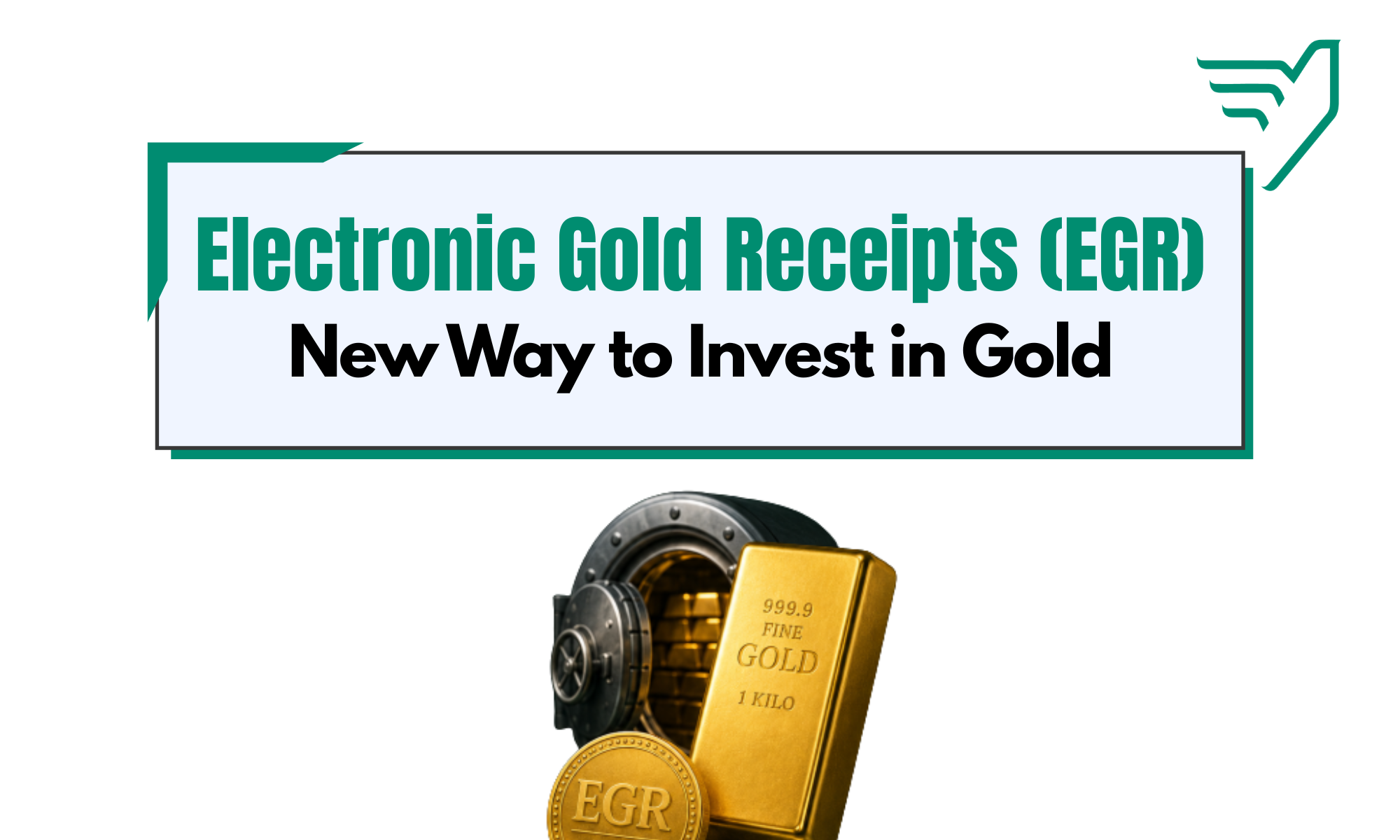
Gold has always been one of India’s favourite investment options. Whether it is jewellery, coins, bars, or gold ETFs, Indian households have trusted gold for generations.
But every form of gold investment comes with its own problems.
Physical gold needs storage and safety. Gold ETFs are easy to buy, but they cannot usually be converted into physical gold by the investor. Digital gold has also raised concerns around regulation and long-term safety.
To solve some of these issues, the National Stock Exchange of India launched Electronic Gold Receipts, or EGRs, as a new trading segment on May 4, 2026. EGRs allow investors to hold gold electronically in their Demat account while also giving them the option to convert it into physical gold later.
What Are Electronic Gold Receipts?
Electronic Gold Receipts, also called EGRs, are Demat-based receipts that represent ownership of physical gold stored in approved vaults.
In simple words, when you buy an EGR, you are not buying paper gold or a gold fund. You are buying an electronic receipt backed by physical gold.
The gold is stored in vaults, and the receipt is held in your Demat account, just like shares or ETFs. NSE has said that EGRs are designed to allow investors to hold gold electronically with assured quality and to enable conversion between electronic and physical formats.
Why Was EGR Introduced in India?
Buying physical gold in India has several challenges.
When you buy gold from a jeweller, you may have to pay GST upfront. In many cases, jewellers also charge making charges, especially on jewellery and sometimes on coins or bars.
Storage is another major issue. Many people keep gold in a bank locker, assuming it is completely safe. However, bank locker compensation is limited. Under RBI-linked locker rules, in cases such as theft, fire, building collapse, or fraud by bank employees, the bank’s liability is capped at 100 times the annual locker rent, not necessarily the full value of the gold stored inside.
There is also confusion around pricing. Gold rates can vary across cities and states due to local taxes, demand, premiums, and jeweller-level pricing.
EGRs aim to make gold investment more transparent, standardised, and easier to trade through the exchange ecosystem.
How NSE EGR Works
NSE’s Electronic Gold Receipt system works by connecting physical gold with the Demat and stock exchange framework.
Here is the basic process:
- Physical gold of approved purity is stored in authorised vaults.
- Electronic Gold Receipts are issued against that gold.
- Investors can buy and sell these EGRs through participating stockbrokers.
- The EGRs are held in the investor’s Demat account.
- Investors can later convert eligible EGR holdings into physical gold, subject to exchange rules, quantity requirements, and applicable charges.
According to reports, NSE successfully dematerialised a 1 kg gold bar as part of the EGR launch, showing how physical gold can be converted into an electronic, tradable form.
Key Benefits of Electronic Gold Receipts
1. No Need to Store Gold at Home or in a Locker
With EGRs, you do not have to personally store gold at home or rent a bank locker for investment gold. Your gold exposure is held electronically in your Demat account, while the underlying physical gold remains stored in approved vaults.
This can reduce the risk of theft, loss, or storage-related stress.
2. Backed by Physical Gold
Unlike some forms of gold investment where you only get price exposure, EGRs are designed to be backed by physical gold stored in vaults.
This makes them attractive for investors who want digital convenience but also want a link to physical gold.
3. Can Be Converted Into Physical Gold
One of the biggest advantages of EGRs is convertibility.
Gold ETFs are easy to buy and sell, but retail investors generally cannot directly convert ETF units into physical gold. EGRs are designed to allow conversion from electronic holdings into physical gold, subject to the minimum quantity and rules set by the exchange and related entities.
4. Held in Demat Form
EGRs can be held in a Demat account, similar to shares, bonds, and ETFs. This makes them easier to track, transfer, and trade.
Investors can monitor prices through their stockbroking platforms once EGR access becomes available through their broker.
5. Transparent Exchange-Based Pricing
EGR trading through NSE can help create a more transparent gold price discovery mechanism.
Instead of depending only on jeweller quotes or city-wise pricing, investors can track exchange-based prices.
6. No Making Charges
When buying jewellery or some gold products, investors often pay making charges. EGRs remove this issue because you are buying gold in an investment format, not jewellery.
Making charges usually reduce the resale value of jewellery, so avoiding them can make EGRs more efficient for investment purposes.
7. GST Is Paid at Physical Conversion Stage
One of the key attractions of EGRs is that GST is not paid in the same way as buying physical gold upfront from a jeweller. GST becomes relevant when EGRs are converted into physical gold, as per applicable rules.
This may improve investment flexibility for people who want gold exposure without immediately taking physical delivery.
EGR vs Physical Gold vs Gold ETF
| Feature | Physical Gold | Gold ETF | Electronic Gold Receipt |
| Held in Demat account | No | Yes | Yes |
| Backed by gold | Yes | Yes, through fund structure | Yes, through vault-held gold |
| Can be converted to physical gold | Already physical | Usually not for retail investors | Yes, subject to rules |
| Storage risk | High | Low | Low |
| Making charges | Possible | No | No |
| GST upfront | Yes, on physical purchase | No direct physical GST purchase | Usually at conversion/delivery stage |
| Exchange-traded | No | Yes | Yes |
| Price transparency | Varies by jeweller/location | Market-linked | Exchange-linked |
Who Should Consider EGRs?
Electronic Gold Receipts may be useful for investors who:
- Want to invest in gold without keeping it at home.
- Prefer Demat-based investment products.
- Want the option to convert digital gold holdings into physical gold later.
- Want transparent exchange-based gold pricing.
- Want to avoid making charges on investment gold.
- Already use a stockbroking app and Demat account.
Important Things to Check Before Buying EGRs
Although EGRs are promising, investors should check a few details before investing.
First, check whether your stockbroker has enabled NSE EGR trading. Since the segment is newly launched, availability may roll out gradually across broking platforms.
Second, understand the minimum quantity required for physical conversion. Some EGRs may be available in smaller denominations for trading, but physical withdrawal may require a higher minimum quantity.
Third, check all applicable charges. These may include brokerage, exchange charges, vaulting charges, conversion charges, delivery charges, and GST at the time of physical delivery.
Fourth, understand taxation. EGR taxation is expected to broadly follow gold-related taxation principles, but investors should confirm the latest tax treatment with a qualified tax professional before making large investments.
Are EGRs Safer Than Bank Lockers?
EGRs may be safer and more convenient than personally storing physical gold because the investor does not have to manage locker safety, theft risk, or purity verification.
However, “safer” does not mean risk-free.
EGRs still depend on exchange infrastructure, vaulting systems, settlement mechanisms, broker access, liquidity, and regulatory rules. Investors should treat EGRs as a regulated market product and understand the terms before investing.
Final Thoughts
Electronic Gold Receipts could become an important new way to invest in gold in India.
They combine many benefits of physical gold and gold ETFs. You get Demat-based convenience, exchange-level transparency, assured quality, no making charges, and the option to convert into physical gold when required.
For investors who want gold exposure without the stress of storing coins, bars, or jewellery in a bank locker, NSE EGRs may offer a modern alternative.
As broker platforms begin enabling EGR trading, investors should compare costs, liquidity, conversion rules, and tax implications before investing.
Want to understand whether Electronic Gold Receipts are the right gold investment option for you?
Connect with Enrichiwise for expert guidance on gold investments, Demat-based products, portfolio planning, and smarter wealth creation.

Start your investment journey with Enrichiwise today and make informed financial decisions with confidence.
Follow Our Enrichwise Channels for more information, updates, and practical Investments Guidance.
Website: https://enrichwise.com/
Youtube: https://www.youtube.com/@enrichwise_financial_services
Instagram: https://www.instagram.com/enrichwise/


