Enrichwise Weekly Mind Gym #122 | 27 June 2026



Seafarers, marine engineers and NRIs often want to invest in India through mutual funds and other financial products. But before investing, they must complete KYC correctly.
For seafarers, KYC can be confusing because they may stay on a ship for 6 to 7 months and then return to India. This creates questions around NRI status, country of tax residence, PAN, CDC, address proof and bank account type.
A wrong KYC declaration can lead to delays, rejection or compliance issues. So, seafarers and NRIs should be careful before submitting their documents.
A seafarer does not automatically become an NRI only because they work on a ship. Residential status must be checked every financial year based on the number of days stayed in India and the applicable income tax rules.
For eligible seafarers, CDC records, including joining and sign-off dates, may be important for calculating the period of stay.
If the seafarer qualifies as an NRI, KYC should be updated as NRI and not as resident Indian.
This is one of the most common mistakes.
Many seafarers mention countries such as Singapore, UAE, USA or the ship’s flag country because their employer, contract or vessel is linked to that country.
This should not be done randomly.
The country of tax residence should be based on the seafarer’s actual tax residency position. Do not select a country only because:
If India is the applicable country of tax residence, PAN may be used as the tax identification number. If the seafarer is genuinely tax resident in another country, the correct foreign tax details should be declared.
PAN is generally required for investing in India. For NRIs and seafarers, passport copy is also an important KYC document.
Investors should ensure that PAN, passport details, name, date of birth and address records are consistent across documents.
For seafarers, the Continuous Discharge Certificate, also called CDC, is a key document. It helps establish seafarer status and supports sailing details.
Along with CDC, seafarers should also keep:
These documents may be required by the KRA, RTA, AMC, broker or bank.
NRIs are generally required to provide overseas address details and proof during KYC.
Seafarers may not always have a fixed foreign residential address because they live and work on a ship. In such cases, CDC, mariner declaration, passport and contract documents may be used as supporting documents.
However, seafarers should not assume that CDC automatically replaces overseas address proof in every case. The exact requirement may differ depending on the institution.
It is better to confirm the document list before submitting KYC.
Once KYC is activated, seafarers and NRIs can invest in Indian mutual funds using the appropriate NRE or NRO bank account.
An NRE account is generally used for foreign income remitted to India. An NRO account is generally used for income earned or received in India.
Using a resident savings account after becoming an NRI can create compliance issues. Therefore, bank account status should also be updated along with KYC.
If a seafarer had earlier completed KYC as a resident Indian and later becomes an NRI, the KYC should be updated.
The investor should also update:
This helps avoid future issues during investment, redemption or taxation.
Before completing KYC, keep these ready:
Seafarers who qualify as NRIs should complete KYC as NRIs, mention their actual country of tax residence, provide PAN where applicable, and submit passport, CDC, contract letter, address proof, FATCA/CRS declaration and NRE/NRO bank account details. They should not randomly mention the ship’s flag country, employer country or contract country as their tax residence.
KYC for seafarers and NRIs is simple if the correct details are provided.
The most important points are to check residential status, mention the correct country of tax residence, keep CDC and passport documents ready, provide address proof as required, and invest through the correct NRE or NRO bank account.
Correct KYC helps seafarers start their investment journey in India smoothly and avoid compliance problems later.
Disclaimer: This article is for educational purposes only. Residential status, tax residency, KYC rules, FEMA rules and taxation may differ based on individual facts and current regulations. Please consult a qualified tax or financial advisor before making investment decisions.

Follow our Enrichwise Channels for more information, updates, and practical Investments Guidance.
Website: https://enrichwise.com/
Youtube: https://www.youtube.com/@enrichwise_financial_services
Instagram: https://www.instagram.com/enrichwise/


We often celebrate the visible wins in investing.
The stock that doubled.
The deal that paid off.
The fund that beat the market.
These are easy to measure and even easier to talk about.
But lasting wealth is rarely built by one big right call. More often, it is built by avoiding the many wrong calls that could have quietly damaged your future.
A good financial advisor’s greatest work may never appear on a performance report.
It is the panic-selling they helped you avoid during a market crash.
The tax mistake they caught before it became expensive.
The “amazing opportunity” they steered you away from.
The diversification that protected one bad year from becoming a ruined decade.
The steady plan that kept you calm while everyone else reacted.
You may never see the wealth you did not lose.
You may never feel the crisis that never happened.
And that is exactly the point.
Many people think wealth creation is just “buy and hold.”
Until a downturn arrives.
Until fear takes over.
Until they are alone, unsure whether to stay invested, sell everything, or chase the next promise.
That is when the true value of financial planning becomes clear. A strong advisor does not just manage investments. They manage behavior, risk, emotions, taxes, timing, and perspective.
The best financial plans are often boring on the outside.
No drama.
No panic.
No headline-making moves.
Just discipline.
Just compounding.
Just a portfolio doing its quiet work over time.
Real wealth is rarely built by the one big decision everyone remembers. It is built by the hundred poor decisions someone helped you never make.
The value of a financial advisor is not always found in what they add.
Sometimes, it is found in what they help you avoid.
In investing, the disasters that never happen can be just as important as the wins that do.
Since 2005, Enrichwise has helped investors build wealth with discipline, perspective, and experience, not by chasing every market headline, but by helping them stay focused on what truly matters: protecting capital, avoiding costly mistakes, and compounding wealth over time.
Ready to build wealth with more clarity and confidence? Connect with Enrichwise today.

Follow Our Enrichwise Channels for more information, updates, and practical Investments Guidance.
Website: https://enrichwise.com/
Youtube: https://www.youtube.com/@enrichwise_financial_services
Instagram: https://www.instagram.com/enrichwise/

Location: Thane & Navi Mumbai
Industry: Wealth Management
Experience: 3 – 7 years (No freshers please)
We are looking for Senior Mutual Fund Operations Executives to join our team. If you are from a financial domain, understand the world of finance, or have done professional courses in finance and are interested in Wealth Management, Exposure to Stock Market Investment, Insurance & Taxation then you will love this position.
Key Responsibilities:
Skills Required:
Eligibility:
Salary: As per Company Std. Professional growth opportunities. Positive and collaborative work environment.
If you are ready to embark on a rewarding career in customer service and meet the eligibility criteria.
About Enrichwise:
With 25+ years of experience, Enrichwise is a trusted financial services firm specializing in wealth management, insurance, and tax advisory. As an AMFI Registered Mutual Fund Distributor, we are committed to delivering expert and reliable financial solutions.
🔹 How to Apply 🔹
📧 Email your resume to: career@enrichwise.com
📞 Contact: +91 87794 73221 / +91 88282 51345
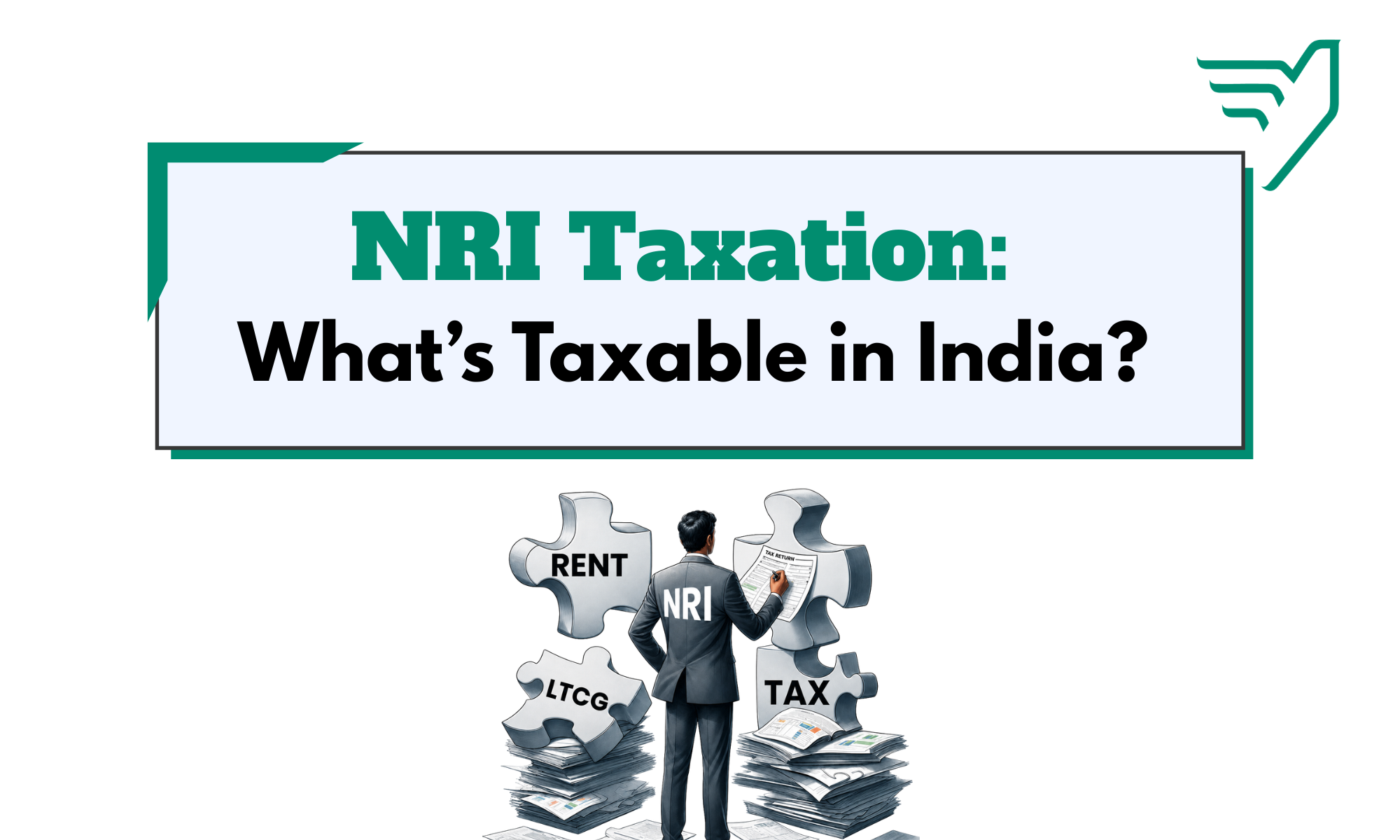
Before calculating your income tax liability in India, the first and most important step is to determine your residential status. Your residential status decides whether only your India-sourced income is taxable in India or whether your global income may also be taxed.
For NRIs, this distinction is crucial. A person living outside India may still have income from salary, rent, bank interest, investments, property, or capital gains in India. Understanding how each type of income is taxed helps avoid penalties, excess TDS, and double taxation.
For income tax purposes, an individual’s residential status is checked for every financial year. You are generally treated as a resident in India if you satisfy any one of the following conditions:
If you do not satisfy these conditions, you are treated as a Non-Resident for that financial year.
However, special relaxation is available in certain cases, such as Indian citizens leaving India for employment, Indian ship crew members, and Indian citizens or Persons of Indian Origin visiting India. In such cases, the 60-day condition may be replaced by 120 days or 182 days depending on the facts and income level.
For individuals, residential status is further classified into three categories:
| Residential Status | Meaning | Tax Impact |
| Resident and Ordinarily Resident | A resident who also satisfies additional stay-based conditions | Global income may be taxable in India |
| Resident but Not Ordinarily Resident | A resident with limited past stay or non-resident history | Indian income and certain foreign income connected with India may be taxable |
| Non-Resident | A person who does not satisfy the basic residency conditions | Generally, only India-sourced income is taxable |
The taxability of foreign income depends on your residential status.
If you are a Resident and Ordinarily Resident, your global income is generally taxable in India. This includes income earned or received outside India.
If you are a Non-Resident, only income that is received, accrued, or deemed to accrue or arise in India is taxable in India. Income earned and received outside India is generally not taxable in India.
The following types of income are usually taxable in India for NRIs:
Salary income is taxable in India if the services are rendered in India. This means that even if an NRI receives salary outside India, the income may still be taxed in India if the employment services were performed in India.
Similarly, salary received in India may be taxable in India even if the services are rendered outside India.
If an Indian citizen is employed by the Government of India and provides services outside India, salary may still be taxable in India. However, specific exemptions may apply to diplomats, ambassadors, and certain government employees depending on the nature of income and applicable provisions.
Example:
Ajay works on a project in China for an Indian company. If his salary is received in India, it may be taxable in India. To avoid unnecessary tax complications, he may choose to receive the salary outside India, subject to the applicable tax laws and employment structure.
Income from a house property located in India is taxable in India, even if the owner is an NRI and receives the rent in a foreign bank account.
The tax calculation for house property income is broadly similar for residents and non-residents. An NRI can generally claim deductions such as municipal taxes paid, standard deduction, and home loan interest, subject to applicable conditions.
Rental income from house property is taxed according to the applicable income tax slab rates.
If a tenant pays rent to an NRI landlord, TDS is generally required under Section 195. This applies because the payment is made to a non-resident. The tenant may also need to comply with Form 15CA and Form 15CB requirements when remitting the rent outside India.
Example:
Nandini owns a house in Goa and lives in Bangkok. She rents out the property and receives rent directly in her Bangkok bank account. Since the property is located in India, the rental income is taxable in India.
Income from other sources includes interest income, dividends, gifts, and similar receipts.
For NRIs, interest earned from Indian bank accounts is treated differently depending on the type of account.
| Account Type | Purpose | Tax Treatment |
| NRO Account | Used to manage income earned in India, such as rent, pension, dividends, interest, and sale proceeds | Interest is taxable in India |
| NRE Account | Used to park foreign earnings in India in Indian rupees | Interest is generally exempt from tax in India |
| FCNR Account | Foreign currency deposit account for NRIs | Interest is generally exempt from tax in India, subject to conditions |
As per FEMA rules, once a person becomes an NRI, they should not continue using a regular resident savings account in India. The existing resident account is generally converted into an NRO account.
A Non-Resident Ordinary account is used to manage income earned in India. This may include rent, pension, dividends, interest, gifts, and sale proceeds from immovable property in India.
Interest earned on an NRO account is taxable in India. TDS may also be deducted by the bank.
A Non-Resident External account is used to park foreign income in India. Deposits are made from foreign earnings and converted into Indian rupees at the applicable exchange rate.
Interest earned on an NRE account is generally exempt from tax in India, subject to eligibility conditions.
A Foreign Currency Non-Resident account allows NRIs to hold deposits in foreign currency. Interest on FCNR deposits is generally exempt from tax in India, subject to applicable conditions.
Business or professional income may be taxable in India if it is connected with India. For example, income from a business set up in India, business operations carried out in India, or income arising through a business connection in India may be taxable.
For NRIs, the key question is whether the income accrues, arises, or is deemed to accrue or arise in India. If yes, it may be taxable in India.
Capital gains earned by an NRI from the transfer of assets situated in India are taxable in India.
This includes gains from:
When an NRI sells property in India, the buyer is generally required to deduct TDS under Section 195 at the applicable rate. The exact rate depends on the nature of the asset, holding period, type of capital gain, surcharge, cess, and any applicable relief.
In certain cases, an NRI may apply for a lower or nil TDS certificate to avoid excess tax deduction.
NRIs may be eligible to claim capital gains exemptions, subject to conditions. Common exemptions include:
These exemptions are subject to timelines, limits, lock-in periods, and other conditions.
NRIs may be eligible for special tax provisions on certain investment income and long-term capital gains from specified assets.
In some cases, investment income may be taxed at a special rate. If the NRI’s total income consists only of specified investment income or eligible long-term capital gains and proper TDS has already been deducted, the NRI may not be required to file an income tax return in India, subject to conditions.
However, filing a return may still be beneficial if excess TDS has been deducted and the NRI wants to claim a refund.
An NRI should consider filing an income tax return in India if:
Yes, NRIs may be able to avoid double taxation through the Double Taxation Avoidance Agreement, also known as DTAA. India has DTAAs with many countries.
If the same income is taxable in India and another country, the NRI may be able to claim relief under the applicable DTAA. The benefit depends on the type of income, country of residence, tax residency certificate, Form 10F, and other documents.
For NRIs, income tax in India depends mainly on residential status and the source of income. If you are a non-resident, your foreign income is generally not taxable in India unless it is received in India or is deemed to accrue or arise in India.
However, income from Indian salary, house property, bank deposits, business connections, capital assets, and investments may be taxable in India. Since NRI tax rules involve TDS, DTAA, FEMA, capital gains exemptions, and account-specific taxation, it is advisable to review your tax position every financial year.

The New Luxury Is Not Owning More. It Is Managing Less.
For decades, luxury was defined by accumulation.
More property.
More assets.
More commitments.
More things to manage.
But today, the definition of wealth is changing.
The truly affluent are not simply asking, “What else can I own?” They are asking, “What can I stop managing?”
Because real wealth is not just measured in money. It is measured in time, attention, freedom, and peace of mind.
And the people who understand this best are learning to outsource the mundane.
To outsource the mundane means handing off the repetitive, time-consuming, low-value tasks that quietly consume your day.
These are the tasks that need to be done, but do not need to be done by you.
They include:
Individually, these tasks may seem small. Together, they create noise.
They fill your inbox.
They interrupt your day.
They occupy mental space.
They turn wealth into another layer of responsibility.
The affluent are recognizing that every hour spent on logistics is an hour not spent on life.
There was a time when being busy looked impressive.
A packed calendar.
Constant notifications.
Endless calls.
A never-ending list of things to manage.
But busyness is no longer the marker of success. In many ways, it is the opposite.
The wealthy are not wealthy because they are busy. They are wealthy because they understand leverage.
They know where their time is best spent. They know what requires their attention and what simply requires execution.
This is why they delegate.
Not because they are incapable of handling the details, but because they know their attention is too valuable to be spent on tasks someone else can manage with precision, discretion, and care.
Money can be earned, invested, protected, and transferred.
Time cannot.
Once an hour is spent chasing paperwork, confirming appointments, reviewing routine admin, or managing household logistics, it is gone.
That is why time is often the most underestimated asset in a wealthy life.
High-performing individuals, families, and business owners understand that their schedule is not just a calendar. It is a reflection of their priorities.
When your time is consumed by admin, your life becomes reactive.
When the mundane is outsourced, your time becomes intentional again.
You can spend more of it with family.
More of it building.
More of it thinking.
More of it resting.
More of it actually living.
Traditional luxury was about visible ownership.
The car.
The home.
The portfolio.
The memberships.
The lifestyle.
But modern wealth is quieter.
It looks like a clear calendar.
A phone placed away at dinner.
A trusted team handling the details.
A financial life that feels organized instead of overwhelming.
A home life that runs smoothly without constant intervention.
In other words, real wealth is not just having more.
It is needing to personally manage less.
This is where financial support, administrative coordination, and trusted advisory relationships become essential.
The goal is not to remove responsibility. The goal is to remove unnecessary friction.
Many successful people are used to being in control. That is often how they built their wealth in the first place.
But over time, managing everything personally can become expensive in ways that are hard to measure.
The hidden costs include:
These costs rarely show up on a balance sheet, but they affect the quality of your life every day.
You may have built wealth to gain freedom, only to find yourself managing the complexity that comes with it.
That is why outsourcing is not an indulgence. It is a strategy.
Affluent individuals often have more moving parts in their lives.
Multiple accounts.
Investment decisions.
Properties.
Tax documents.
Family commitments.
Travel.
Charitable giving.
Estate considerations.
Business interests.
The more complex life becomes, the more important it is to have trusted support.
Delegating mundane financial and administrative tasks helps create structure around complexity. It ensures that important details are not missed, while also freeing you from the constant mental load of managing everything yourself.
This is especially important when discretion and trust matter.
The right support does not simply “take tasks off your plate.” It helps quiet the noise around your wealth, your schedule, and your life.
The purpose of outsourcing the mundane is not laziness. It is alignment.
It is choosing to spend your time on what only you can do.
Only you can be present with your family.
Only you can make the major life decisions.
Only you can define what wealth is meant to create for you.
Only you can decide what kind of life you want your money to support.
Everything else should be evaluated.
Does this task need my judgment, or just my permission?
Does this require my expertise, or simply follow-through?
Is this worth my time, or just consuming it?
These are the questions that separate a busy life from a wealthy one.
For many people, the best place to begin is with their financial life.
Why?
Because wealth is often the source of both freedom and complexity.
When your financial world is organized, supported, and professionally managed, it becomes easier to reduce the noise around everything else.
Bills, documents, planning, decisions, and follow-ups no longer need to live entirely in your head.
You gain visibility.
You gain structure.
You gain time.
And from there, the benefits expand into the rest of your life.
Less admin.
Less friction.
Less mental clutter.
More space for what matters.
The new luxury is not having more to manage.
It is having less that demands your constant attention.
The affluent are not chasing busyness. They are building systems of trust, delegation, and support so their time can be spent where it matters most.
Because every hour spent on logistics is an hour you do not spend on your life.
Your time is your most expensive asset.
Stop spending it on paperwork.
Outsource the mundane. Reclaim the hours. Live the wealth you have built.
Connect with us to Manage Less.
Follow Our Enrichwise Channels for more information, updates, and practical Investments Guidance.
Website: https://enrichwise.com/
Youtube: https://www.youtube.com/@enrichwise_financial_services
Instagram: https://www.instagram.com/enrichwise/

Location: Thane & Navi Mumbai
Industry: Insurance
Salary: As per company standards
Experience: 1-3 Years
Enrichwise is looking for a proactive and client-focused Insurance Executive to join our team. The ideal candidate should have strong knowledge of insurance products, excellent communication skills, and experience in client servicing and business development.
Key Responsibilities:
About Enrichwise:
With 25+ years of experience, Enrichwise is a trusted financial services firm specializing in wealth management, insurance, and tax advisory. As an AMFI Registered Mutual Fund Distributor, we are committed to providing expert and reliable financial solutions to our clients.
🔹 How to Apply 🔹
📧 Email your resume to: career@enrichwise.com
📞 Contact: +91 87794 73221 / +91 88282 51345
If you have relevant experience and a passion for delivering excellent client service in the insurance domain, we’d love to connect with you!


